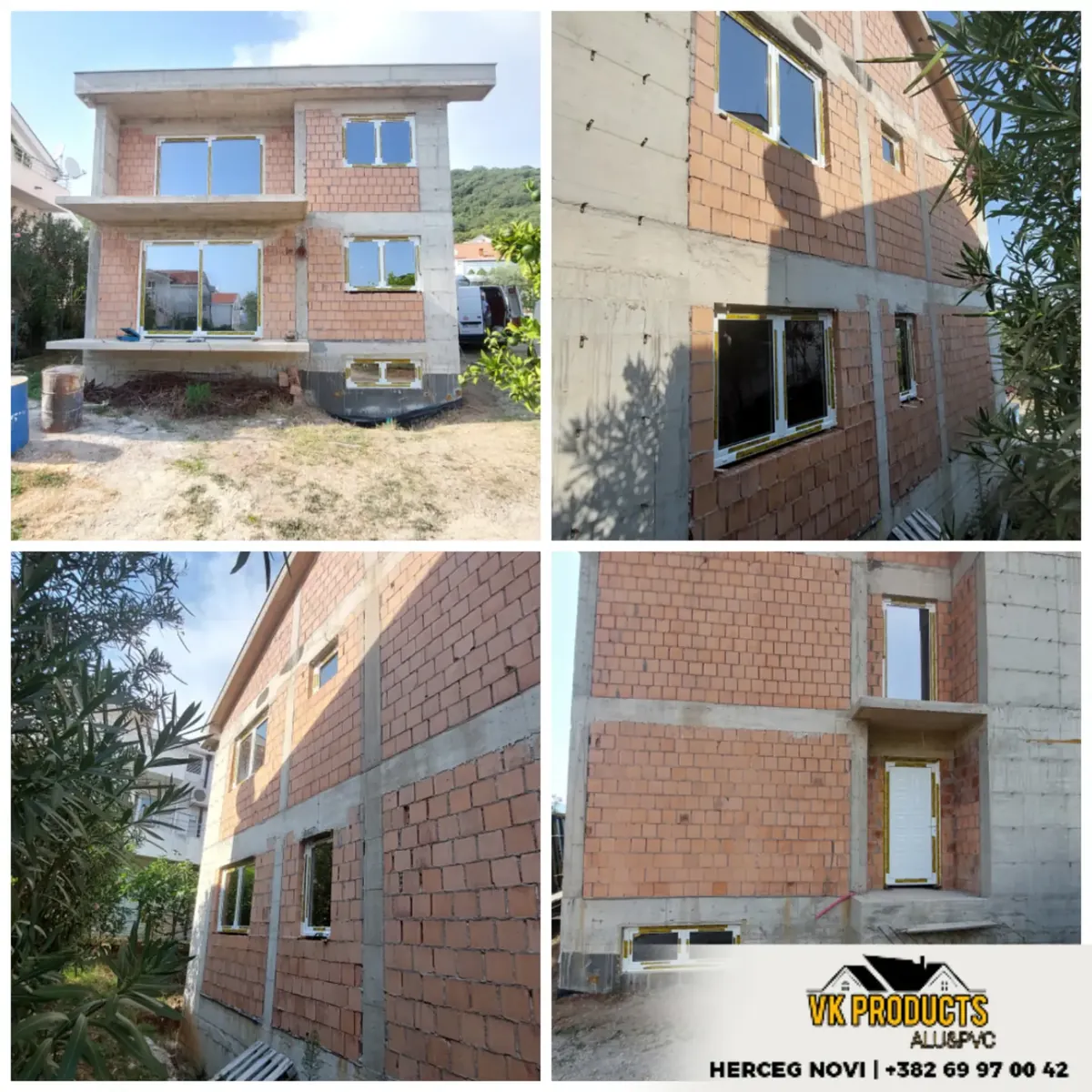
The number of sashes isn't just about looks. It affects how much light comes in, how you ventilate and how easy the window is to clean.
When you replace windows, the width of the opening usually decides the number of sashes. But there's still room for choice within that, and it's worth thinking about before you sign the order.
Single-sash
For bathrooms, kitchens, storerooms and smaller rooms. They open side-hung or tilted, which is the simplest way to ventilate without a draught. They're the most affordable option and the easiest to maintain.
Double-sash
Standard for living rooms and bedrooms, usually around 140 to 160 cm wide and often paired with a roller shutter. There are two variants:
- with a fixed central mullion: each sash opens independently and the structure is stiffer;
- without a mullion (with a moving post on the sash), open both sashes and the opening is completely clear, with nothing in the middle.
Triple-sash
For wider openings, typically 180 to 240 cm wide and 120 to 160 cm high. The usual layout is a double-sash section on one side and a single sash separated by a mullion on the other, but it can be adjusted: which sashes tilt, which only turn, where the mullion goes.
And a fixed pane?
Fixed glazing is cheaper and insulates better than an opening sash. But it has one practical drawback people discover only at the first clean: you can't wash the outside of a fixed pane from indoors. On the ground floor that's fine; on the third floor it isn't. So on upper floors we only plan fixed panes where they can be reached.
A few practical tips
- Give at least one sash in every room a tilt function.
- If you're planning mosquito nets, say so early, the type of net depends on how the window opens.
- Put the handle at a height everyone in the house can reach; above a kitchen worktop that's often forgotten.
- We take the measurements for the order, use your own only for a rough quote.